
Price-first interconnection for large loads
New data centers are pushing our power grid to its limits. At Forward Market Design, we believe that our grid will be best-served by a price-first interconnection process that unifies large loads and generation.
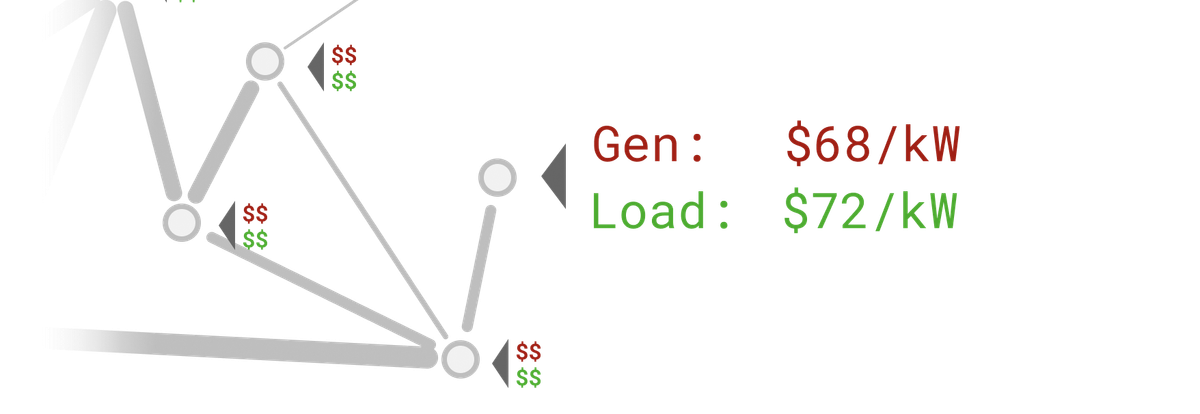
New data centers are pushing our power grid to its limits. Every new data center requires careful scrutiny to make sure that there is infrastructure and generation to support it, and our grid operators are struggling. The challenge has attracted attention ranging from United States Department of Energy (DOE)’s advance notice of proposed rulemaking (ANOPR) to directed initiatives at PJM Interconnection and other RTOs/ISOs. Data centers are a key component of our future, and process innovation is critical to connecting them to the grid.
At Forward Market Design, we believe that our grid will be best-served by a price-first interconnection process that unifies large loads and generation. RTOs/ISOs will post interconnection prices for both load and generation. Developers of data centers and generation will assess interconnection costs, make informed decisions about where to build, then commit and know that their interconnection requests will be processed in months. Having a unified process also means that data centers and generation can coordinate, ensuring that capacity can grow alongside load and enabling data centers that bring their own generation to go through a single streamlined process. Such a unified, price-first approach to interconnection will eliminate the bottleneck on new data centers and the generation needed to support them.
The questions
Three questions are central to the challenges we face today:
- How do we handle the grid upgrades needed to support the load and ensure that the cost is fairly allocated to the data center?
- How do we ensure adequate generation to support the load so that existing load isn’t negatively impacted?
- How do we know what proposals are going to get built so grid operators can plan effectively?
The rapid proliferation of data centers means that these are both new problems for grid operators. Addressing them requires a few features:
- We need a robust interconnection process for large loads that will include grid impact studies and a fair allocation of grid upgrade costs. Historically, large loads were rare enough that they could be handled ad-hoc. Supporting today’s volume of data center proposals requires evolving to a robust, formal process that will identify upgrades and ensure that consumers aren’t footing the bill for them. The DOE’s ANOPR is already pushing grid operators in this direction.
- We need to accelerate interconnection. Existing interconnection processes are too slow. Developers proposing new generation typically find themselves waiting years to get an interconnection agreement. Years is too long for data centers—we cannot afford to hold data centers back with a multi-year interconnection process, nor can we afford to hold generation in a multi-year queue while load grows. We need fast interconnection for both load and generation..
- We need to unify the interconnection process for load and generation. Implementing a large load interconnection process separate from the generator interconnection queue will create as many problems as it solves—more than a third of proposed data centers will have some on-site generation according to a Bloom Energy survey, and these will need to be studied as both load and generation. Without a unified process, friction, delays, and frustration will abound.
- We need an interconnection process where proposals come with commitment. Our grid operators struggle today because they do not know whether a proposed data center is serious or simply exploratory. Developers often submit proposals in multiple locations to identify the best location for a single data center. Increasing developer commitment is critical to giving our grid operators an accurate view on future load growth and limiting churn in the interconnection process.
The unified price-first solution
A unified price-first process elegantly addresses the challenges of large load interconnection. It works as follows:
- An RTO/ISO publishes separate load and generation interconnection prices for each bus for the current interconnection cycle.
- Developers plan data centers and generation based on posted prices.
- Developers submit their proposals to the interconnection cycle, committing to build and paying their interconnection fees. Proposals may be large loads, generation, a combination of load and generation.
- The RTO/ISO identifies grid upgrades required to support the combined load and generation connecting in the cycle.
- Load and generation alike get interconnection agreements after roughly 6 months.
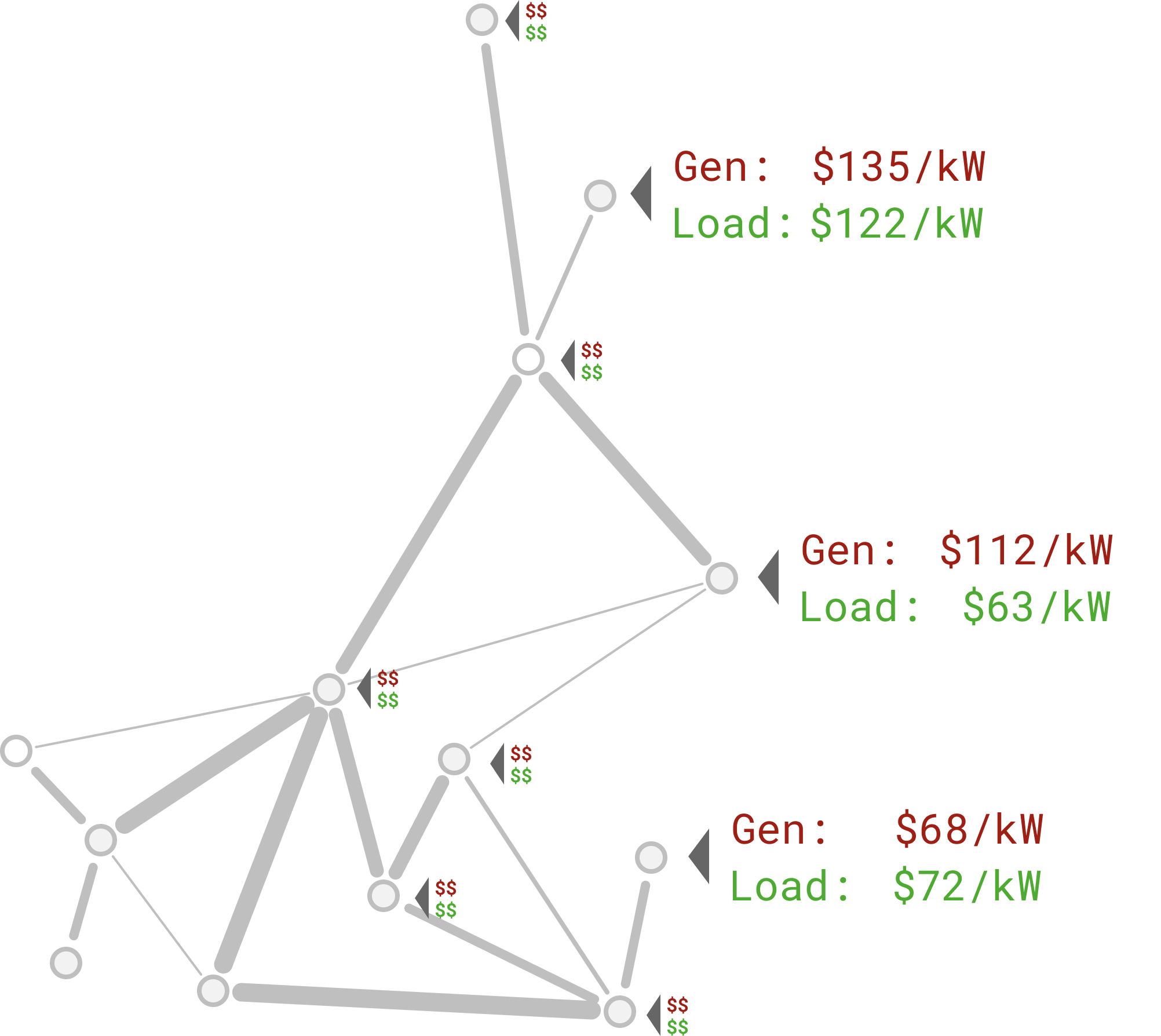
This process addresses the key features needed for effective interconnection:
- Large loads go through the same robust interconnection process as new generation, ensuring that grid upgrades are properly identified and new load pays its fair share.
- The price-first approach accelerates interconnection for load and generation alike.
- Large loads and generation go through the process together, enabling coordination among developers and efficient processing for load that brings its own generation.
- Up-front interconnection fees mean that data center developers are committed once they have joined the interconnection process.
The unified price-first process is an elegant approach that will streamline interconnection and lay a foundation for decades of grid growth.
Learn more
We believe that improving the interconnection process is critical to the future of the grid and are invested in helping RTOs and ISOs develop them. If you have thoughts—about price-first or other ways to improve the process—we would love to hear from you. Email Chris Wilkens (chris.wilkens@forwardmarketdesign.com).
Thanks to Peter Cramton, Darrell Hoy, David Malec, and Hector Lopez for contributing to this post.