
The Forward Energy Market as a long-term reliability solution for PJM
We are excited to announce our whitepaper, The Forward Energy Market as a long-term reliability solution for PJM, has been published as part of PJM’s Powering Reliability Through Market Design (PRTMD) workshop.
We are excited to announce our whitepaper, The Forward Energy Market as a long-term reliability solution for PJM, has been published as part of PJM’s Powering Reliability Through Market Design (PRTMD) workshop.
PJM’s Reliability Pricing Model (RPM) was designed to ensure reliable energy at least cost. In recent years, it has come under increasing strain. Rapid load growth, heterogeneous generation technology, and slow supply response have pushed the limits of what the RPM was designed to handle. Today, resource adequacy concerns and rising capacity prices are driving immediate reliability and affordability issues.
In May, PJM launched the PRTMD initiative to revisit the fundamentals of the RPM for the new era. PJM identifies a credibility trap that must be addressed—scarcity produces high-capacity prices to signal need; those prices translate quickly into consumer affordability shocks, creating pressure for political and regulatory intervention that undoes the signal. We also argue that fundamental reinforcements are needed to build a reliability mechanism that can deliver long-term reliability:
- Reliability should be built around transactions of actual need—granular energy and energy options—rather than administrative approximation such as capacity.
- The reliability mechanism should provide timely, continuous signals of future need and immediate opportunities to respond, instead of a single large procurement event that provides delayed and incomplete feedback.
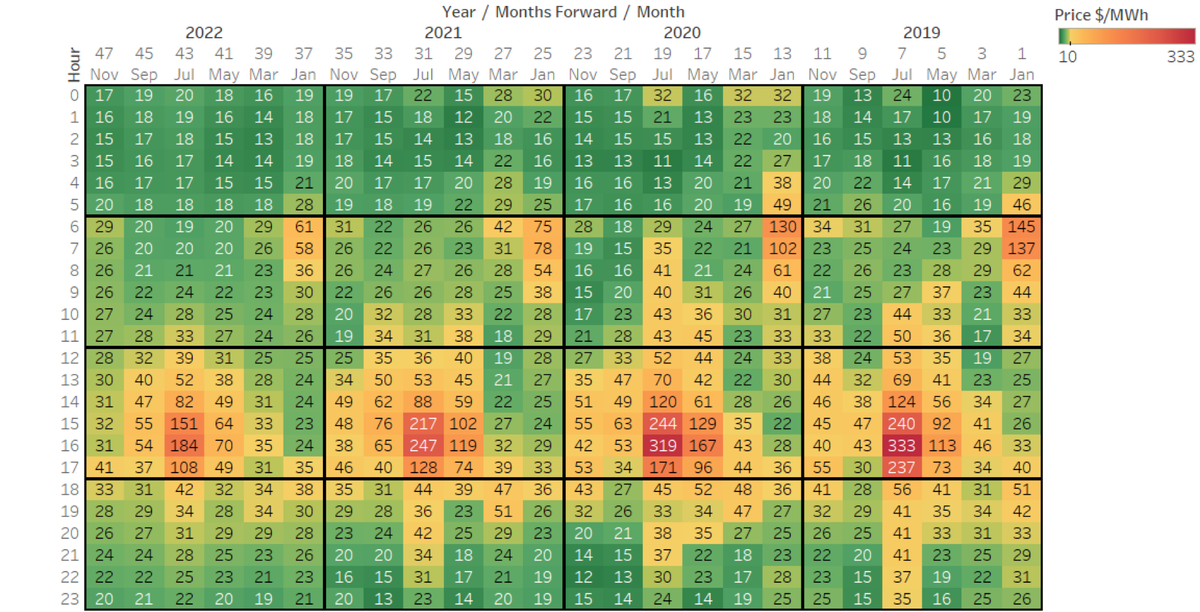
We offer the Forward Energy Market proposed by Cramton et al. as a solution to these weaknesses. The FEM provides a structural way out of the credibility trap by insulating consumers from price shocks through energy options. Addressing fundamental issues, the FEM shifts the reliability mechanism from administrative capacity to continuous trading of granular forward energy and energy options up to four years ahead. A progressively increasing LSE hedging requirement causes expected future needs to enter the market as they become known, while flow trading and trade-to-target technology make continuous trading of highly granular products feasible. The result is a reliability mechanism with a tighter feedback loop between supply and demand and a more credible connection between scarcity, revenues, investment, and eventual equilibrium.
We thank GridLab for supporting the whitepaper.
Learn more
We believe that improving the Forward Energy Market is an important innovation in grid reliability. If you have thoughts—about our whitepaper or about the Forward Energy Market generally—we would love to hear from you. Email Chris Wilkens (chris.wilkens@forwardmarketdesign.com).